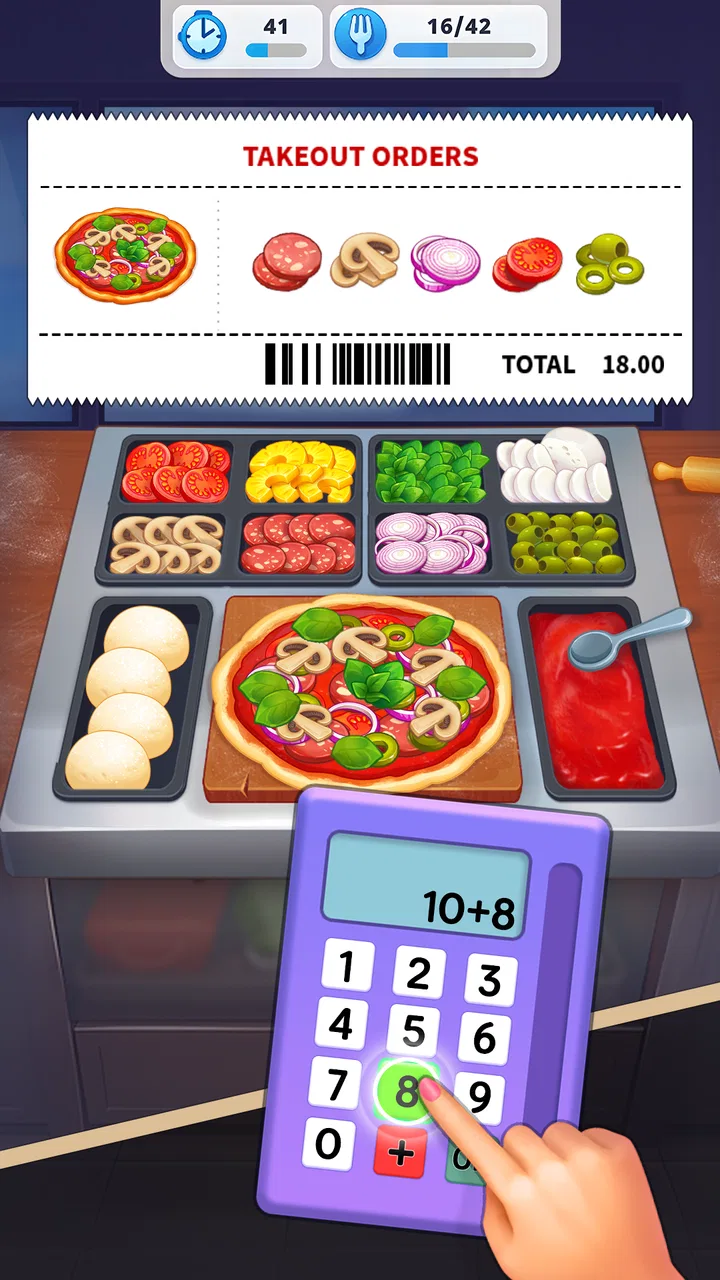
Royal Cooking - Cooking Game
- 4.7
- Rating
- 50.00M
- Installs
- Free
- Price

 Analysis by App-foxy
I spent time with Royal Cooking as the kind of player who wants a quick arcade game rather than a serious cooking simulator. Its basic appeal is easy to understand: you prepare food, keep a busy kitchen moving, and gradually build a restaurant-focused story through short bursts of play. What surprised me is how much the experience depends on rhythm and prioritization rather than on simply tapping ingredients as fast as possible.
That distinction matters when deciding whether to install it. This is not a recipe reference, a realistic management tool, or a slow creative sandbox. It is a free arcade game from Matryoshka, designed for players who enjoy clear objectives, quick decisions, and the satisfaction of improving a run after a mistake. I found it most enjoyable in small sessions, especially when I had enough attention for the kitchen to feel challenging but not exhausting.
The game is available for everyone by age rating, works from Android 7.0 onward, and has reached over ten million installs. Its average rating sits at 4.7 from around 602 thousand ratings, which gives a useful picture of its broad appeal without guaranteeing that every player will enjoy its pace. The current version is 1.21.0.342, and the game can be started without paying, although optional in-app purchases range from $0.29 to $199.99 per item.
You May Also Like

 AccuWeather: Weather Radar
AccuWeather Review: A Quick, Clear Forecast for Everyday Decisions
For everyday plans, the best forecast is the one you can understand quickly. AccuWeather makes rain timing, radar, and local conditions easy to act on, with a few trade-offs.

 Hill Climb Racing
Why Hill Climb Racing Still Turns Crashes Into One More Run
A tiny car, a bumpy hill and one more upgrade: Hill Climb Racing keeps resurfacing because its simple chaos makes every near-miss feel personal.

 AliExpress - Shopping App
AliExpress Makes Global Shopping Feel Personal, but Shoppers Bear the Risk
AliExpress turns a global marketplace into a pocket-sized discovery engine. Its reach is useful, its shopping loop compelling, and its trade-offs easy to miss.

 Lords Mobile: Kingdom Wars
Lords Mobile Is a Kingdom-Building Routine, Not a Quick Match
A case-by-case verdict on the building, battles, device demands, and social commitments that make Lords Mobile rewarding for some players and exhausting for others.

 PDF Scanner app - TapScanner
TapScanner Makes Paperwork Easier to Capture, Check, and Share
TapScanner makes scanning with a phone feel less like a rescue operation and more like a dependable step in getting work done. Its capture tools are useful, though not flawless.

 Block Blast!
 Shows How Much a Puzzle Game Can Leave Out
A quiet grid game shows why puzzle players increasingly value instant clarity, repeatable skill and low-pressure play—and where the genre still needs to catch up.
More From Our News Desk
View All News


How to decide whether Royal Cooking fits your play style
I’d use this section to help you tell whether the kitchen’s quick, attention-heavy rhythm suits the way you actually play, rather than relying on the food theme alone. A useful test is to notice whether you enjoy improving your order of actions after a hectic round or would rather have a game that lets you pause and plan without pressure. That distinction is what makes the difference between a short-lived novelty and a habit you’ll want to keep.
The right question is not whether you like cooking games
I would not choose this game simply because its subject is food. The more important question is whether you like arcade pressure. The kitchen asks you to notice several things at once, act in the right order, and recover when a dish or customer becomes a problem. If you enjoy games where a familiar routine gradually becomes harder, this has a strong chance of holding your attention.
If you prefer decorating a restaurant, inventing your own menu, or carefully planning a business over long periods, you may be looking for a different kind of cooking game. Royal Cooking puts the emphasis on active service. The restaurant story gives the sessions context, but the moment-to-moment work is still about timing, handling orders, and keeping the flow under control.
I also considered how well it works in ordinary situations. It is suitable for a short break because the central actions are easy to understand and the game does not require a lengthy tutorial before becoming playable. At the same time, it can become more demanding once several tasks compete for attention. I would not open it while trying to follow a conversation or do another concentration-heavy task; the arcade pressure is part of the fun, but it also means the game rewards focus.
What to watch for during the first sessions
My first useful habit was to stop treating every order as equally urgent. A new player can react to the most visible request, but that is not always the best choice. I found it more effective to glance across the kitchen, identify which preparation takes the most time, and begin that task before dealing with quicker actions. This small change makes the game feel less frantic and turns a series of taps into a simple queue-management exercise.
A second habit is to avoid using every available action immediately. When the screen becomes busy, it is tempting to tap continuously and hope the right things happen. I had better results when I paused for a brief visual scan, then committed to a sequence. That approach is especially useful when several customers are waiting and one careless action can interrupt the rhythm of the whole service.
The game is therefore a good fit for people who enjoy learning through repetition. You do not need specialist knowledge about cooking, and the age rating makes it approachable for a broad audience. However, younger players or anyone sensitive to time pressure may find the later pace less relaxing than the food theme initially suggests.
Where the restaurant story helps
The restaurant setting gives the arcade rounds a reason to exist. Instead of feeling like unrelated mini-challenges, the cooking tasks contribute to a larger sense of progress. I liked having that context because it made a successful service feel more meaningful than simply clearing another level.
Still, I would keep expectations realistic. The story is mainly a framework for the cooking action, not the reason I would recommend the game on its own. If your priority is character writing or a deep narrative, the restaurant theme may feel light. If you want a clear reason to keep improving your performance, it does its job well.
Where this game wins against familiar alternatives
Compared with slower restaurant-management games, Royal Cooking gets to the active part quickly. There is less waiting for a business plan to pay off and more direct involvement in each order. I prefer this when I want immediate feedback: I can see the consequences of a rushed decision almost at once, then try again with a better sequence.
Compared with purely decorative cooking games, it offers a stronger sense of pressure. Decorating can be satisfying, but it does not always provide a clear test of skill. Here, the challenge comes from juggling tasks and preserving momentum. That gives the game more replay value for me because improvement is not only about unlocking something; it is also about becoming more efficient.
It also sits apart from realistic cooking simulations. I would not use it to learn kitchen technique, ingredient handling, or real restaurant operations. Its strength is abstraction. Food preparation becomes a readable arcade language, which makes the game accessible and keeps the focus on decisions rather than realism.
The trade-off behind that arcade design
The same speed that makes the game convenient can make it repetitive for players who need constant novelty. The basic loop remains centered on serving and managing a busy kitchen. I enjoyed refining my approach, but someone who dislikes repeating a familiar pattern may lose interest even if the setting is appealing.
There is also a difference between being challenging and being relaxing. I could play it casually at first, yet a difficult service can demand enough attention that it stops feeling like a background activity. That is not a flaw for an arcade audience, but it is an important distinction when comparing it with idle restaurant games or creative cooking apps.
Practical ways to play more efficiently
My most useful workflow was to divide attention into three passes. First, I checked what was already in progress. Second, I started the slowest necessary preparation. Third, I handled the quick actions that could be completed immediately. This prevented me from repeatedly abandoning one task to chase another and made crowded moments easier to read.
I also learned not to judge a round only by its opening. A messy start does not always mean the service is lost. When I made an early mistake, I focused on restoring a stable order of actions instead of trying to fix everything simultaneously. That recovery mindset is one of the better hidden lessons in the game: the goal is not perfect tapping, but controlled prioritization after something goes wrong.
For short sessions, I recommend stopping after a successful improvement rather than continuing until frustration builds. Because the loop encourages “one more attempt,” it is easy to turn a quick break into a longer session. Players who want a more relaxed experience can treat each round as a small challenge and avoid chasing every possible improvement in one sitting.
Free to start, but think about spending
The free entry point is a genuine advantage. I could understand the core appeal before deciding whether the game deserved space on my phone. That makes it easier to recommend as a trial, particularly for families or casual players who do not want to commit upfront to a paid download.
Optional purchases are part of the experience, with individual items priced from $0.29 up to $199.99. The wide range means I would approach the purchase screen carefully rather than assuming every offer is equally useful. My advice is simple: play long enough to decide whether the basic loop itself is enjoyable before spending anything. If the timing-based cooking is not fun without extras, purchases will not solve that underlying mismatch.
This is also where the cost of switching matters. Moving from a slower cooking game to this one means giving up some relaxation for faster decisions. Moving from a purely arcade game to this one may feel easy because the controls and objectives are familiar, but the restaurant story adds a progression reason to continue. Moving away from it later may be effortless if you only use it for short breaks, but players who become attached to improving their service rhythm may miss that specific kind of challenge.
Who should install it
I would recommend Royal Cooking to someone who wants a free, approachable arcade game with a food setting and a clear restaurant thread. It is especially suitable for players who enjoy multitasking, quick retries, and the feeling of becoming more efficient after learning a level’s demands. It can work for a family device as well, since the content rating is Everyone, though the increasing pace may not suit every child.
I would also suggest it to players who have tried restaurant-management games but found them too passive. The direct kitchen work gives every session a more active role. You are not merely checking a business from time to time; you are participating in the service and dealing with the consequences of your choices.
Who should choose something else
I would skip it if your ideal cooking game is mainly about recipes, decoration, or peaceful experimentation. Royal Cooking is not the best match for someone who wants to take unlimited time over each dish. I would also look elsewhere if you dislike repeated attempts, because improvement often comes from replaying the same kind of challenge with better timing.
Players who are uncomfortable with optional purchase prompts should keep that in mind before installing. The game is free, but the presence of purchases means it is worth using the device’s spending controls if children will play. That is a practical precaution, not a criticism of the cooking loop itself.
My recommendation after playing
My final view is positive, with a clear condition: choose Royal Cooking for its arcade rhythm, not merely for its restaurant theme. The game succeeds when I treat each kitchen as a small planning problem. I watch the queue, start long tasks early, reserve attention for urgent actions, and recover calmly after mistakes. That combination gives the food setting real gameplay value.
It is less convincing as a deep simulator or a purely relaxing pastime. The pressure can be exactly what makes a round satisfying, but it can also be the reason a different alternative fits you better. If you want active service, short sessions, and a progression framework that makes repeated cooking feel purposeful, I think it is worth trying at no upfront cost.
For me, the strongest recommendation is that the game teaches its own best strategy through play. I began by tapping reactively and ended up organizing the kitchen in advance. That change made the experience more rewarding than the simple premise suggested. Install it if you want a lively arcade cooking challenge; skip it if you are searching for a quiet restaurant builder or a realistic culinary simulator.
FAQs for Royal Cooking - Cooking Game
01What is Royal Cooking - Cooking Game about?
Royal Cooking - Cooking Game is a delightful culinary adventure that lets players step into the shoes of a chef managing a bustling royal kitchen. Players get to prepare a variety of dishes, improve their cooking skills, and serve exquisite meals to satisfy royal guests. The game combines time management and strategy to create an engaging experience.
02Can I play Royal Cooking - Cooking Game offline?
Yes, Royal Cooking - Cooking Game can be played offline, allowing you to enjoy cooking challenges without an internet connection. However, certain features, such as leaderboard rankings and in-game purchases, may require online access. This flexibility makes it convenient for gaming on the go.
03Are there in-game purchases available in Royal Cooking - Cooking Game?
Royal Cooking - Cooking Game offers in-game purchases that enhance the gameplay experience. Players can buy items like special ingredients, cooking tools, or boosters to speed up their progress. While these purchases can offer advantages, they are optional, and the game can be enjoyed fully without spending real money.
04What age group is Royal Cooking - Cooking Game suitable for?
Royal Cooking - Cooking Game is designed for players of all ages, with its easy-to-learn mechanics and engaging gameplay. However, it is particularly appealing to children and young teens who enjoy time management and cooking games. Parental guidance is recommended for younger players due to in-game purchase options.
05How does Royal Cooking - Cooking Game handle player data and privacy?
Royal Cooking - Cooking Game prioritizes user privacy by adhering to strict data protection regulations. The game collects minimal data necessary for gameplay, such as progress and preferences. Players are encouraged to review the privacy policy within the app to understand how their data is managed, ensuring a secure gaming environment.
Pros
- Engaging and colorful graphics enhance gameplay.
- Variety of recipes keeps the game exciting.
- Intuitive controls make it easy to learn.
- Frequent updates with new content.
- Offline mode available for uninterrupted play.
Cons
- In-app purchases can be expensive.
- Ads may interrupt gameplay frequently.
- Limited customization options for kitchens.
- Some levels feel repetitively similar.
- Requires a stable internet for some features.

Royal Cooking - Cooking Game
Gallery